5 minute read · Ultimo Research Desk · Reviewed 5 Sept 2026
What is Metals Trading? Gold, Silver and Copper

Gold has been money for five thousand years, and it still behaves like it: when currencies wobble, wars start, or inflation runs hot, capital flows into metal. That is why metals trading — gold, silver, platinum and palladium — remains one of the most liquid and closely watched corners of the financial markets, and why XAU/USD is among the most traded instruments on any platform.
The Metals You Can Trade
- Gold (XAU) — the flagship. A safe-haven asset that tends to rise when real interest rates fall, the dollar weakens, or risk aversion spikes. Daily turnover in gold rivals major currency pairs.
- Silver (XAG) — part money, part metal. Silver follows gold directionally but with roughly double the volatility, and its industrial demand (solar panels, electronics) adds its own cycle.
- Platinum & palladium — industrial precious metals dominated by automotive catalyst demand. Thinner liquidity, sharper moves.
What Moves Precious Metal Prices
Real interest rates are the single most important driver of gold. Metal pays no yield, so when inflation-adjusted bond yields rise, holding gold costs more in forgone income and the price tends to fall — and vice versa.
The US dollar prices the entire complex. Metals are quoted in dollars, so a weaker dollar mechanically lifts them for holders of other currencies, and dollar strength weighs on them.
Risk sentiment and geopolitics produce the famous safe-haven bid: crises, sanctions and equity sell-offs push capital into gold, often violently and overnight.
Central bank buying has become a structural force — official institutions have been net buyers of gold for years, putting a slow, persistent floor under the market.
Supply matters more for silver, platinum and palladium, where mine output and industrial demand can dominate the picture for months.
Ways to Trade Metals
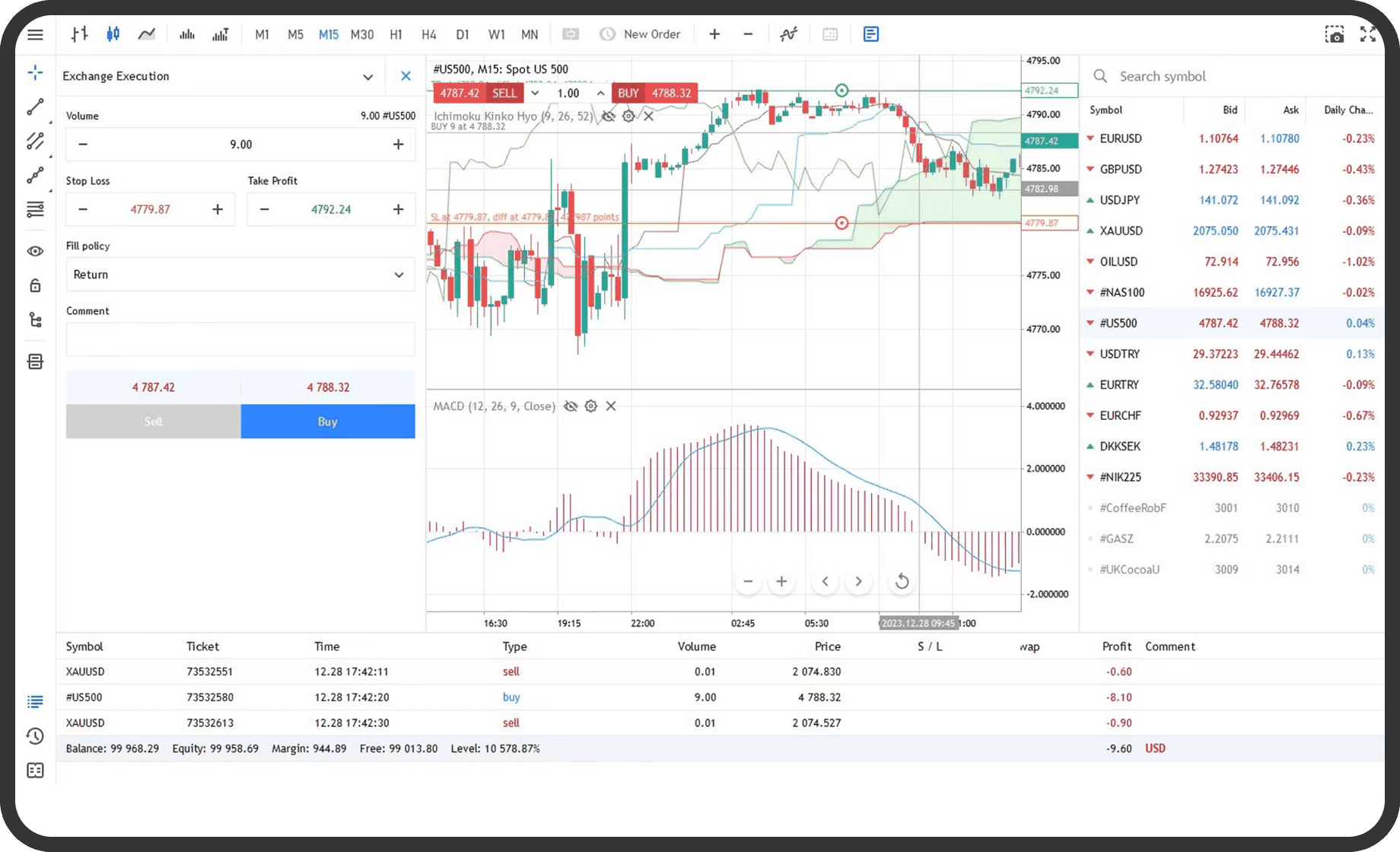
- Spot metals (CFDs) — trade XAU/USD or XAG/USD like a currency pair: long or short, with leverage, no vault required. This is how most retail traders access metals, and how it works at Ultimo through MetaTrader 5.
- Futures — exchange-traded contracts with fixed sizes and expiries, the domain of institutions.
- Physical bullion and ETFs — ownership rather than trading; no leverage, no shorting.
Spot CFDs suit active traders because you can react to a Fed meeting at 9pm, trade both directions, and size positions precisely. Remember that leverage magnifies losses as well as gains — see our guide to what a margin call is before sizing up.
Popular Approaches
Trend following works well in gold, which produces long, persistent moves when the macro backdrop shifts. News trading focuses on US inflation prints and Fed decisions — the minutes around a CPI release are often gold's most volatile of the month. The gold–silver ratio (how many ounces of silver one ounce of gold buys) is a classic relative-value signal: historically high readings have preceded periods of silver outperformance.
Whatever the approach, metals reward the same discipline as any market: defined risk per trade, a stop on every position, and awareness that overnight positions carry swap costs.
Gold Is Not One Trade
Gold behaves like three different assets depending on what is driving the market, and traders who treat it as one thing get whipsawed by the switch.
As a haven. In a crisis — conflict, a banking scare, a sharp equity selloff — money moves into gold and the price rises regardless of anything else. This is the behaviour gold is famous for, and it is also the least predictable, because it depends on events nobody schedules.
As a rate instrument. Gold pays no interest. When real yields on government bonds rise, holding gold costs you the yield you gave up, and the price tends to fall. Much of the time this is the dominant driver, which is why gold often moves on inflation data and central bank meetings rather than on anything gold-specific.
As a dollar trade. Gold is priced in dollars, so a stronger dollar mechanically makes gold more expensive for everyone else and tends to push the price down. On quiet days, XAU/USD is close to being an inverse dollar chart.
The confusion arrives when two of these pull in opposite directions — a crisis that also drives the dollar up, for instance. Knowing which regime you are in matters more than any indicator on the chart.
Silver, and Why It Moves Twice as Hard
Silver is roughly half precious metal and half industrial input, and that split explains almost everything about how it trades.
It follows gold, but with more amplitude: the gold–silver ratio swings widely, and silver routinely moves two to three times as far in percentage terms on the same news. Traders who size a silver position the way they size a gold one discover this quickly and expensively.
It is also sensitive to manufacturing demand — solar panels, electronics, batteries — in a way gold is not. So a weak global growth outlook can pull silver down while gold holds, even though both are "precious metals".
The practical implication is about position size, not direction. The same dollar risk on silver requires a smaller position than on gold, and a stop placed at a distance that is normal for gold will be hit routinely on silver by ordinary noise.
What Metals Trades Cost
Spreads on XAU/USD are quoted in dollars and cents rather than pips: a spread of 0.30 on gold means the price must move thirty cents in your favour to break even. On a 1-ounce position that is $0.30; on a 100-ounce position, $30.
Overnight financing applies to metals as it does to other CFDs, so the same rule holds — the cost is trivial across a few days and material across months. Metals also widen sharply around the US session open and at major data releases, more than the majors do, which is worth knowing before you place a tight stop just before one.
Trading Metals with Ultimo
Ultimo Securities offers spot gold and silver alongside 20+ currency pairs on MetaTrader 5, with institutional-grade execution and transparent pricing. Opening an account takes minutes — start here, verify your identity, and you can be trading XAU/USD the same day.
Written by the Ultimo Research Desk and checked against our own contract specifications and client agreement before publication; reviewed again when those change. Educational only — nothing here is a recommendation to trade. Spotted an error? Tell us.
Ready to see how commodities trades at Ultimo?
Commodities trading