5 minute read · Ultimo Research Desk · Reviewed 5 Sept 2026
Forex Spreads Explained: What You Actually Pay to Trade
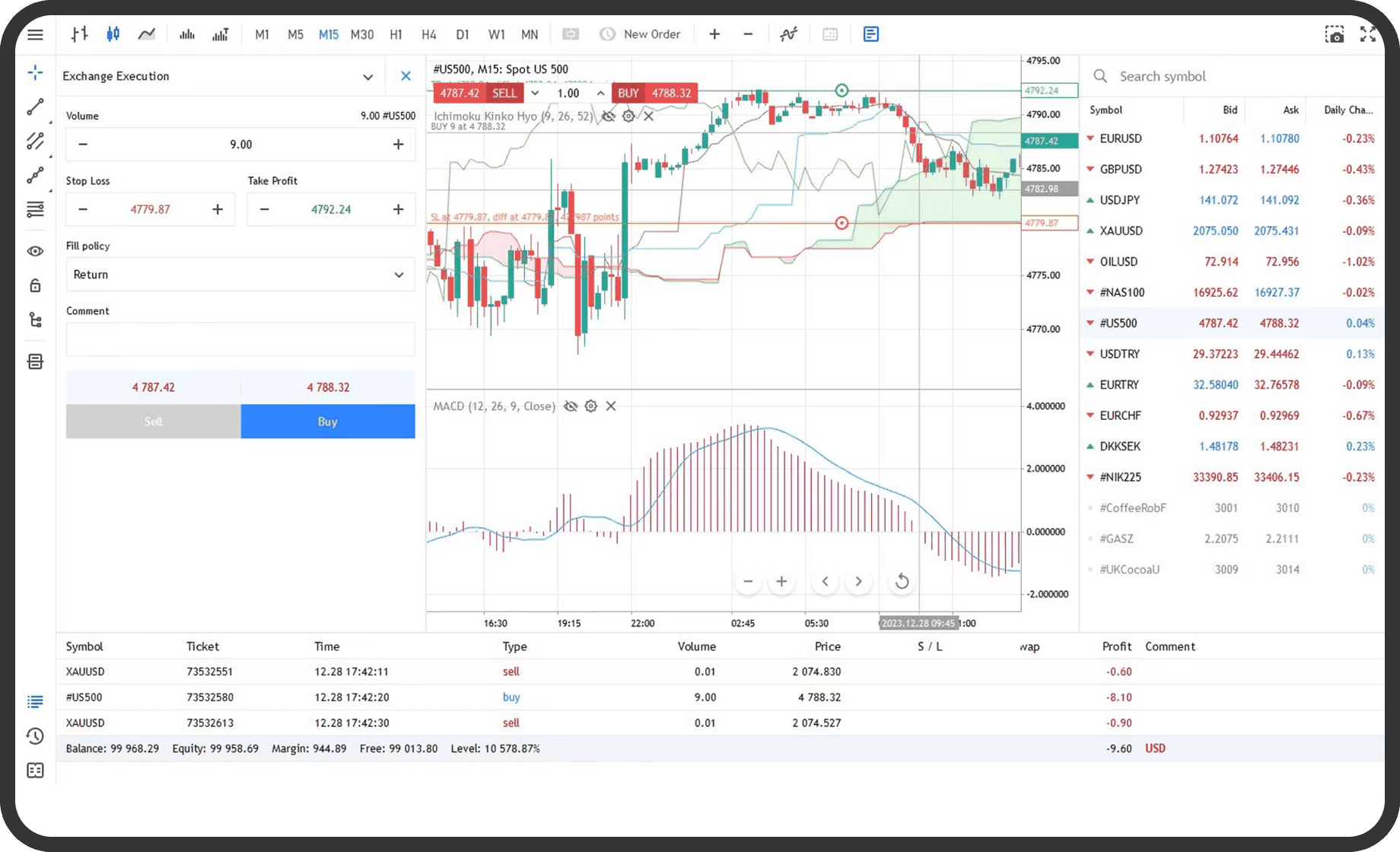
Every forex quote has two prices: the bid (what buyers pay) and the ask (what sellers receive). The difference between them is the spread — and for most retail traders, it is the main cost of trading. Understanding spreads is the difference between knowing what you pay and hoping for the best.
How to Read a Spread
If EUR/USD shows a bid of 1.0850 and an ask of 1.0852, the spread is 2 pips. The moment you open a position, you are "down" by the spread — your trade starts at a small loss and becomes profitable once price moves past it. That's why spread size directly affects your break-even point on every single trade.
What a Spread Costs in Money
On a standard lot (100,000 units) of EUR/USD, one pip is worth about $10. A 2-pip spread therefore costs ~$20 per round trip; on a mini lot, ~$2. Multiply by hundreds of trades a year and the spread quietly becomes your biggest line item — far more important than most beginners realize.
Fixed vs. Variable Spreads
- Fixed spreads stay constant regardless of market conditions. Predictable, but usually wider on average.
- Variable (floating) spreads move with liquidity — razor thin in calm, liquid markets, wider in turbulence. Most modern brokers, Ultimo included, quote variable spreads because they reflect the real interbank market.
What Makes Spreads Widen
- News releases — in the seconds around a central bank decision or jobs report, liquidity evaporates and spreads jump.
- Session gaps — late New York afternoon and the early Asian session are the thinnest hours.
- Exotic pairs — fewer participants means wider spreads than majors like EUR/USD.
- Market shocks — unexpected events can widen spreads dramatically for minutes or hours.
Timing matters: the London–New York overlap typically offers the tightest spreads of the day.
Spreads Are Not the Whole Story
A "zero spread" headline can hide costs elsewhere. Always evaluate the full package:
- Commission — some brokers charge per lot on top of the spread. Ultimo charges zero commission on forex.
- Swap fees — overnight financing on positions held past rollover.
- Data and platform fees — conventional exchanges often charge for market data; Ultimo doesn't.
- Slippage — poor execution can cost more than a wide spread. Fast servers close to liquidity (Ultimo runs on London LD4 Equinix) keep slippage low.
How to Keep Your Trading Costs Low
- Trade liquid pairs during liquid hours.
- Avoid opening positions in the seconds around major news unless that is your strategy.
- Match your strategy to costs: scalping demands ultra-tight spreads; swing trading is more forgiving.
- Measure your real cost per trade monthly — what gets measured gets managed.
What a Spread Costs You Over a Year
A single pip feels like nothing. Run it forward and it stops feeling like nothing.
Suppose you trade one standard lot at a time, take four trades a day, and trade twenty days a month. At a 1-pip spread on EUR/USD, each trade costs about $10 to open.
- Per day: $40
- Per month: $800
- Per year: $9,600
Now suppose your broker's average spread is 1.5 pips instead of 1.0. The same activity costs $14,400 a year. That half-pip — the one that looks like a rounding error on a quote screen — is $4,800, and it comes out of the same account your profits go into.
This is the real reason to care about pricing, and it is also why a headline "from 0.0 pips" figure deserves suspicion. What matters is the average spread on the pairs you actually trade, at the hours you actually trade them.
Comparing Brokers Without Being Misled
Spread comparisons are easy to manipulate, so compare like this:
Look at the pairs you trade, not EUR/USD. Nearly every broker prices EUR/USD tightly because that is the number people compare. The spread on GBP/JPY or USD/ZAR tells you far more about how a broker really prices.
Look during your hours. A spread quoted at the London–New York overlap is the tightest of the day. If you trade the Asian session, that figure is not the one you will pay.
Add the commission back in. A "raw spread" account with 0.1-pip spreads and a $7 round-turn commission per lot costs about the same as a 0.8-pip commission-free account. Neither is cheating; they are two ways of quoting the same cost. Compare the total.
Watch what happens at news. Every spread widens around a major release. The question is how far and for how long — and the only way to know is to have the platform open when one lands.
Putting a Spread Into Money
A spread quoted in pips is an abstraction until it is multiplied out. What one pip is worth depends on the pair and the size: $10 on a standard lot of a dollar-quoted major, about $6.79 on USD/JPY at 147, $1 on a mini lot. Our pip value calculator does the conversion and shows the working, which is the fastest way to see why a half-pip difference that looks trivial on a quote screen is not trivial across a month of trading.
The Ultimo Approach to Pricing
Ultimo is built on a simple principle: we earn when you trade, not when you lose. That means competitive variable spreads sourced from deep tier-1 liquidity, zero commission, no data fees, and no hidden markups — so you always know what you pay. See it for yourself on a free demo account, or explore forex trading with Ultimo and start trading in minutes.
Written by the Ultimo Research Desk and checked against our own contract specifications and client agreement before publication; reviewed again when those change. Educational only — nothing here is a recommendation to trade. Spotted an error? Tell us.
Ready to see how forex trades at Ultimo?
Forex trading