5 minute read · Ultimo Research Desk · Reviewed 5 Sept 2026
CFDs vs Shares, Futures and Options: Which Does What
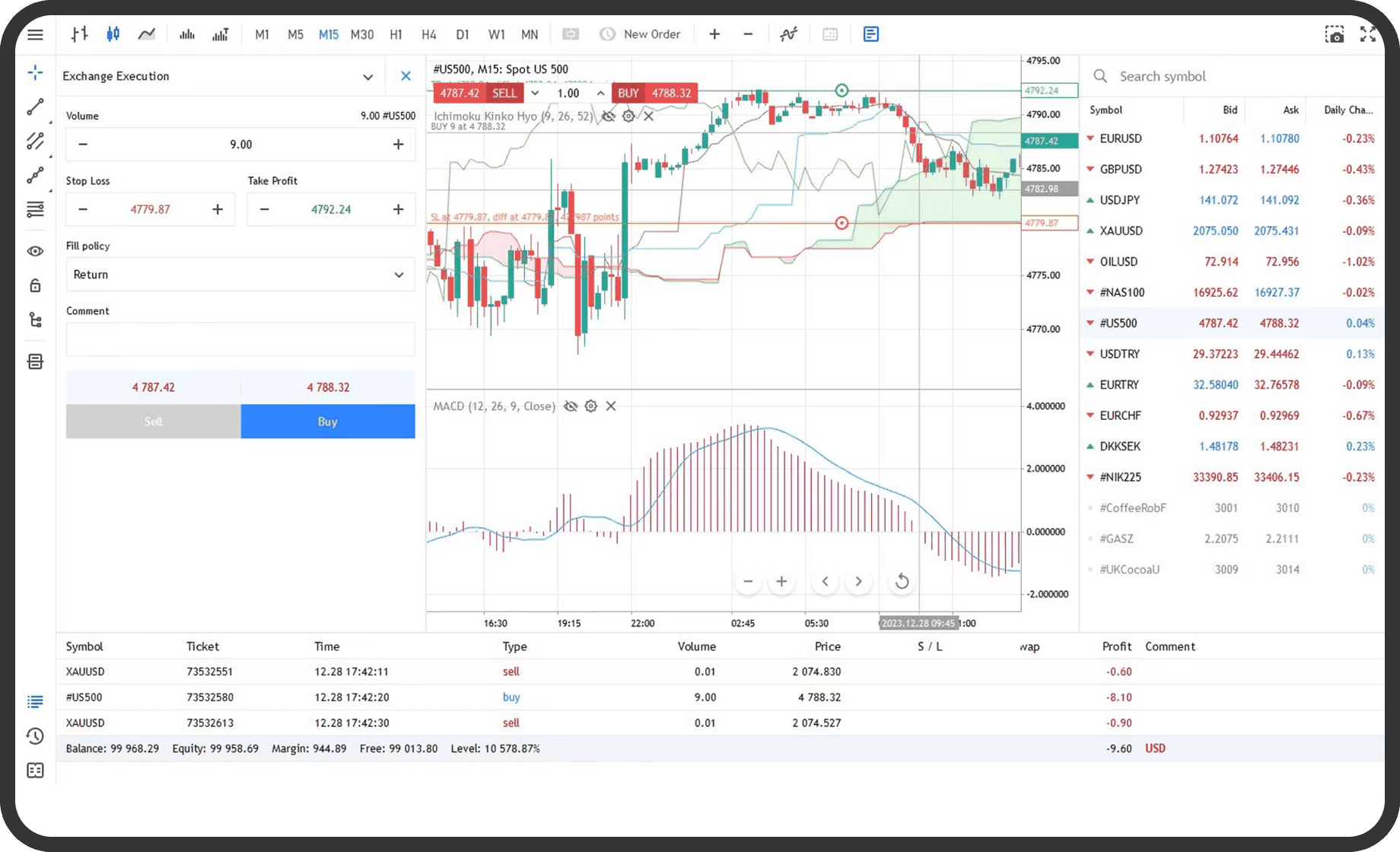
Four instruments can express the same view — that a price will rise. They are not interchangeable, and the differences are not matters of preference: each is built for a different holding period and a different kind of risk.
The short version
| Shares | CFDs | Futures | Options | |
|---|---|---|---|---|
| You own | The asset | A contract on the price | A contract to trade later | The right, not the obligation |
| Leverage | Generally none | Yes | Yes, built in | Yes, through the premium |
| Expiry | None | None (some roll) | Fixed | Fixed |
| Cost of holding | None | Financed nightly | Roll cost | Time decay |
| Going short | Difficult | Same as long | Same as long | Buy a put |
| Maximum loss buying | Your stake | More than margin | More than margin | The premium |
| Suits | Years | Days to weeks | Weeks to months | Defined-risk views |
The row that decides most choices is the cost of holding, and the row people misread is the maximum loss.
Shares
You buy a piece of a company. You appear on the register, you can vote, you receive dividends, and you can hold indefinitely with no carrying cost.
The trade-off is capital. Taking a $100,000 position requires $100,000, and expressing a bearish view means borrowing stock, which is awkward and often unavailable to retail investors.
Use them when the horizon is years and the thesis is about the business.
CFDs
A contract to exchange the difference in a price between opening and closing. No ownership, no register, no vote — and because nothing changes hands, the position can be leveraged and short as easily as long.
The cost is nightly financing, which makes a CFD structurally unsuited to a multi-year holding: you would pay for the leverage every night of it. Dividends appear as an adjustment rather than a payment, credited on a long position and debited on a short one.
Losses can exceed the margin posted, since the whole position value moves with the market — although a stop-out normally closes positions before an account goes negative.
Use them when the horizon is days or weeks and you want size without the capital, or you want to be short. Our CFD guide covers the mechanics in full.
Futures
An exchange-traded, standardised agreement to buy or sell at a set date. Leverage is inherent, pricing is transparent because everyone trades the same contract on the same venue, and costs at size are usually lower than a CFD equivalent.
The obstacles are contract size and expiry. One standard contract can represent a very large exposure, which puts many futures out of reach at retail account sizes; and every contract expires, so a longer-term view has to be rolled from one to the next, with a cost each time. In a market in contango, where later contracts cost more, rolling repeatedly erodes a long position independently of the price.
Use them when size is large enough to matter, transparency is valuable, and the timeframe is weeks to months.
Options
A right rather than an obligation: a call gives you the right to buy at a set price by a set date, a put the right to sell.
The distinctive property is asymmetry. Buying an option caps your loss at the premium — no stop loss required, no gap risk beyond what you paid — while leaving the upside open. That is genuinely different from everything else here, and it is why options are the instrument for a view you want to express with strictly defined risk.
The price of that is time decay. An option loses value simply because time passes, so being right about direction and wrong about timing loses money. Options are also the hardest of the four to price and to reason about; a beginner buying them without understanding decay and volatility usually discovers both the expensive way. And selling options rather than buying them reverses the asymmetry entirely: capped gain, potentially very large loss.
Use them when defined risk matters more than simplicity, and you understand what you are buying.
Choosing by holding period
The clearest way through is to start from how long you intend to hold.
Years — shares. Nothing else avoids a carrying cost over that span. Weeks to months — futures if the size justifies them, CFDs if it does not, options if you want the loss capped. Days — CFDs. Financing is negligible over a few nights and the flexibility of size is the point. Hours — CFDs, and watch the spread rather than the financing: at that frequency the spread is nearly the entire cost.
Where people go wrong
Using a CFD as a long-term holding. The leverage is what you are paying for, every night. If you do not need it, you are renting something you are not using.
Assuming leverage is the risk. The size is the risk. Leverage only removes the capital barrier that would otherwise have stopped you taking that size — our margin calculator shows both numbers because the difference between them is the point.
Buying options because the loss is capped, and ignoring decay. Capped loss is not low probability of loss. Most bought options expire worthless.
Comparing on one cost line. A futures contract with no financing may still cost more than a CFD once the roll and the commission are counted, and a "zero commission" CFD is paid for in the spread.
What we offer
Ultimo offers CFDs — on forex, indices, shares, energy, metals and crypto — through MetaTrader 5. That is a deliberate scope rather than a complete one, and this guide is written so you can tell when a CFD is the wrong instrument for what you are trying to do.
If the horizon is years, a share held with a stockbroker is the better tool. If you want strictly defined risk on a single event, an option is. Knowing that is worth more to you than a page arguing that one product suits everything, and worth more to us than a client using the wrong instrument for a year.
If a term here was unfamiliar, the glossary defines it in plain language.
Written by the Ultimo Research Desk and checked against our own contract specifications and client agreement before publication; reviewed again when those change. Educational only — nothing here is a recommendation to trade. Spotted an error? Tell us.