8 minute read · Ultimo Research Desk · Reviewed 23 Sept 2026
From Demo to Live Trading: What Changes and What to Keep
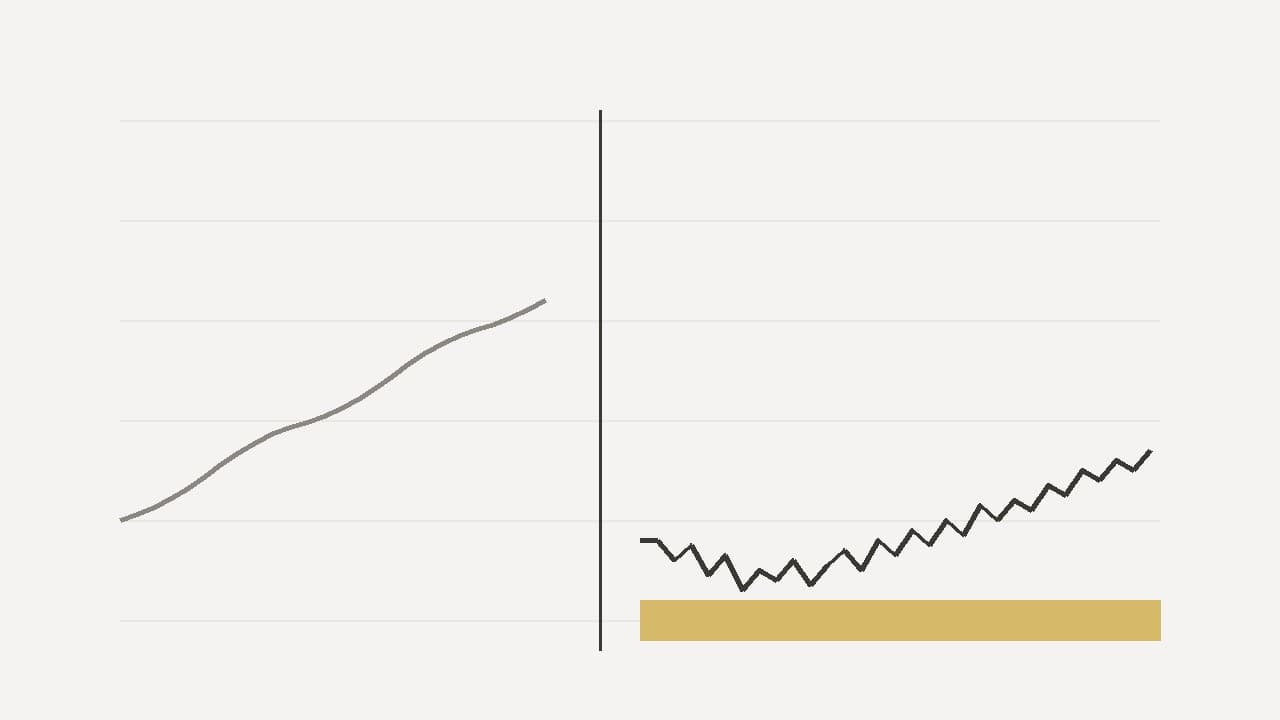
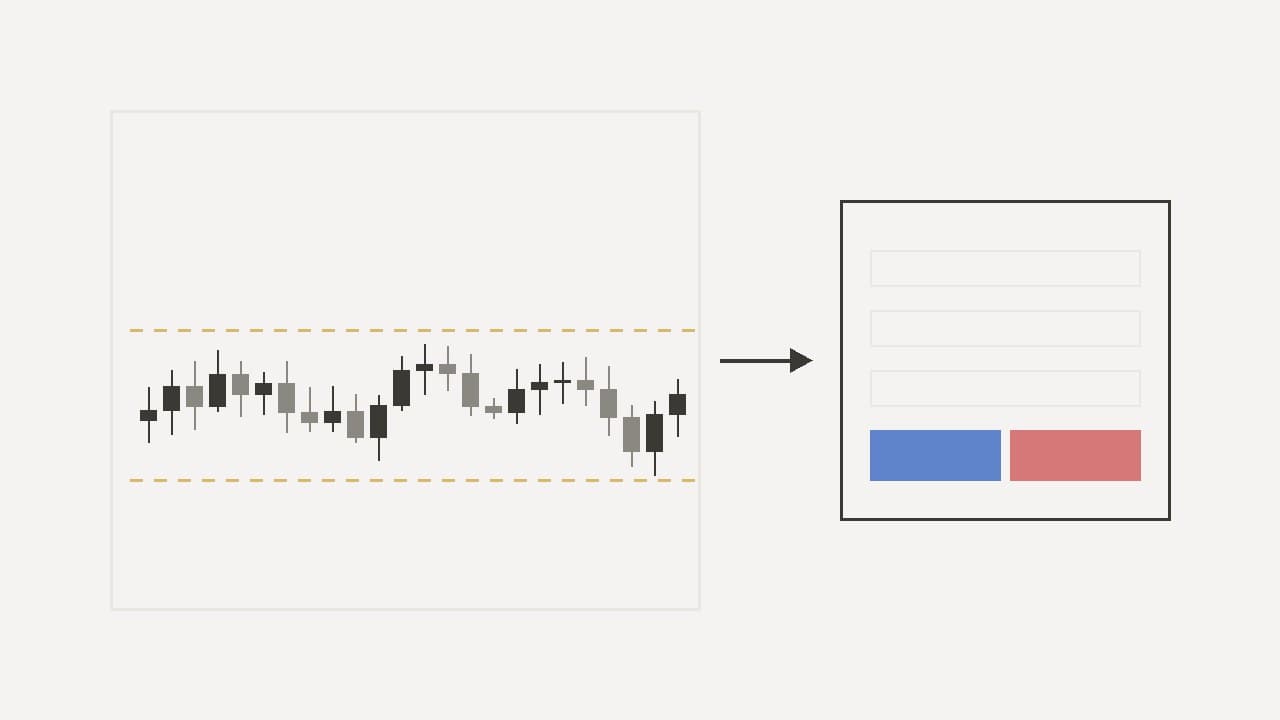
The method that worked on the demo is not the thing that breaks when you go live. What breaks is the person running it, because a losing trade in real money produces an urge to intervene that nothing on a demo ever trained you to resist. The way across is to change one variable at a time: keep the method, keep the rules, keep the size in risk terms — and make the money small enough that the first live losing run is a lesson rather than a catastrophe.
That is the answer. The rest of this guide is what it means in practice.
What a demo account does and does not show you
A demo teaches the platform. Where the buttons are, how an order ticket works, what a pending order does when the terminal is closed, how margin is displayed, how a stop is modified. All of that transfers to a live account exactly, and it is worth learning on a demo because mistakes there are free. Our demo account page sets out the specific things a demo cannot show you; the short version is below.
It does not show you the cost of being wrong. A loss on a demo is a number that changes; a loss on a live account is money that is gone, and the difference is felt in the hands before it is understood in the head. Most of what goes wrong in the first live month is a direct consequence of that difference: stops moved because the loss "cannot" be taken, winners closed early because the gain "might" disappear, size increased after a loss to get it back. None of those decisions were available on the demo, because none of them had a reason to exist.
It also does not show you execution under stress in the same way. Demo fills are typically clean and instant. On a live account, the price you get is the price available at the moment the order reaches the server, and around news or thin hours that can be some distance from the price you clicked. The contract specifications page shows what each instrument's spread and hours look like; how a fill behaves when the market is moving fast is something you only learn by trading small enough to afford finding out.
What to carry across unchanged
The method. If it was tested on the demo, it goes live as it is. The first live month is not the time to add a filter, change the timeframe or try a second instrument. You are testing yourself, not the method, and you can only test one thing at a time.
The rules. Position size as a percentage of the account, stop distance, the daily loss limit, the drawdown limit — every number from the trading plan transfers in percentage terms. A 1% risk on a 50,000 USD demo becomes a 1% risk on whatever the live account holds. If the plan does not have those numbers written down, write them before funding, not after.
The journal. The demo journal, if you kept one, is the baseline. The live journal is where you find out what changed. Log the trade, the reason, the size, and — the part that matters here — whether you did what the plan said. The first useful live statistic is not the profit; it is the percentage of trades taken exactly as planned. A method with an edge does not keep it when a third of the trades are taken outside the rules.
The checklist for going live
There is no fixed number of demo trades or months that qualifies anyone. There are measurable conditions, and these are the ones that matter:
- A written plan with the size, stop, daily limit and drawdown limit as numbers, not intentions.
- Enough demo trades to have seen a losing run. A method that has only been tested through a good month has not been tested. If the sample contains no run of five or more losses, it is too small to know what the method does when it loses.
- Rule-adherence above 90% on the demo. If the rules were broken on virtual money, they will be broken faster on real money.
- A live amount that can be lost in full without consequence. Not "would be annoying to lose" — without consequence. This is the single condition most people fail and pretend they have passed.
- The reduced-size rule written down — what triggers it, how long it lasts, what brings size back.
If any of the five is missing, the demo has not finished its job. That is not a criticism; it is the demo doing exactly what it is for.
Sizing the first live account
The first live account has one purpose: to find out how you behave when a loss is real, at a price you can pay for the information. That argues for two things.
Fund it with less than you eventually intend to trade with. The minimum first deposit is 100 USD on a Standard account, and the point of a low minimum is exactly this — the first live month should be traded with an amount whose complete loss would be a shrug. The size can be raised later, on a condition you set in advance. It cannot be un-lost.
Trade at a fraction of the demo's risk per trade. If the demo ran at 1% per trade, run the first live weeks at 0.5% or less. The method's edge does not depend on the size; your ability to follow the rules through the first live losing run does, and half-size buys twice as many trades of practice for the same drawdown.
The condition for stepping up should be written before the first trade. Something concrete: twenty live trades with rule-adherence above 90% and the drawdown limit never reached. Not "when I feel ready" — feeling ready is what a good week produces, and a good week is exactly when the step up costs the most.
A worked example
A trader has run a method on a demo for three months: 48 trades, 44% winners, average winner 1.8 times the average loser, longest losing run six. The demo was 50,000 USD at 1% risk, so 500 USD per trade.
The live account is funded with 1,000 USD — an amount they can lose entirely. Risk per trade is set at 0.5%, which is 5 USD per trade, and the position size calculator turns that into lots for each stop distance. The first losing run arrives in week two: five losses, 25 USD in total, a 2.5% drawdown.
On the demo, that run was 2,500 USD of virtual money and was held without a thought. Live, 25 USD produced the urge to widen the fourth stop and to double the fifth trade. Neither happened, but both were felt — and that is the information the account was funded to buy. Twenty trades later, rule-adherence is 95% and the drawdown limit was never approached; the step up to 1% and a larger deposit was decided by the written condition, not by the mood of a good week.
Had the trader funded 10,000 USD and run 1% from the start, the same run would have cost 500 USD and the urges would have been ten times stronger — and the answer to "how do I behave under loss" would have been learned at ten times the price, with the account's future depending on the answer.
Where the transition fails
Changing the method and the money at once. Two variables, one result, no way to know which caused it.
Treating the first live month's profit as the measure. A profitable month at 60% rule-adherence is a warning, not a success. The rule-adherence number is the result that matters until the sample is large enough for the profit number to mean anything.
Funding the live account with the intended full amount "to make it real." It makes it real in exactly the way that produces the worst decisions, at the point where you have the least practice at resisting them.
Going back to the demo after a bad live week. The demo cannot teach the thing the bad week revealed. Reduce size, keep going, keep the journal.
Trading leveraged products puts your capital at risk; a small first live account limits what the first mistakes cost, and it does not make them unlikely.
Written by the Ultimo Research Desk and checked against our own contract specifications and client agreement before publication; reviewed again when those change. Educational only — nothing here is a recommendation to trade. Spotted an error? Tell us.