6 minute read · Ultimo Research Desk · Reviewed 5 Sept 2026
How to Choose a Regulated Forex Broker: A 7-Point Checklist

Choosing a broker is the single highest-stakes decision a trader makes — before any strategy, any indicator, any trade. The wrong broker can cost you everything a good strategy earns. Here is a seven-point checklist to separate trustworthy brokers from the rest.
1. Verify the Regulation — Don't Just Read It
Every serious broker operates under a financial regulator that imposes capital requirements, conduct rules and reporting obligations. But "regulated" on a website means nothing until you verify it:
- Find the license number on the broker's site (it should be easy to find, usually in the footer).
- Go to the regulator's own register and search for it.
- Check that the company name on the license matches the company you're dealing with.
Ultimo Securities, for example, is authorized and regulated by the Financial Services Commission of Mauritius under license GB24203027 — verifiable directly on the FSC's public register, along with the LEI 984500B048D993D6DC04.
2. Ask Where Your Money Sleeps
The gold standard is segregated client accounts: your funds held separately from the broker's own operating money, at reputable banks. Segregation means the broker can't touch client money to run its business, and in a worst-case scenario your funds are identifiable and protected. If a broker is vague about where client money is held, walk away.
3. Understand How the Broker Makes Money
This is the question most traders never ask. A transparent broker earns from spreads and commissions when you trade — its interests are aligned with you trading long and successfully. Be wary of models built on client losses. Ultimo's stance is explicit: we earn when you trade, not when you lose. Whatever broker you evaluate, make them answer this question clearly.
4. Measure the Real Cost of Trading
The advertised spread is only the headline. Total cost includes commissions per lot, overnight swap rates, deposit and withdrawal fees, market data fees, and inactivity charges. Two brokers advertising the "same" spread can differ meaningfully in total cost. Ask for the full fee schedule — a serious broker publishes one; read our guide to forex spreads to understand what you're actually paying.
5. Test Execution Quality
Price means nothing if you can't get filled at it. Execution quality shows up in slippage, requotes and speed — and it depends on infrastructure. Look for brokers with servers in major financial data centers (Ultimo runs on London LD4 Equinix, cross-connected to tier-1 banks) and test execution yourself on a demo account during a busy session before depositing.
6. Check the Platform and Tools
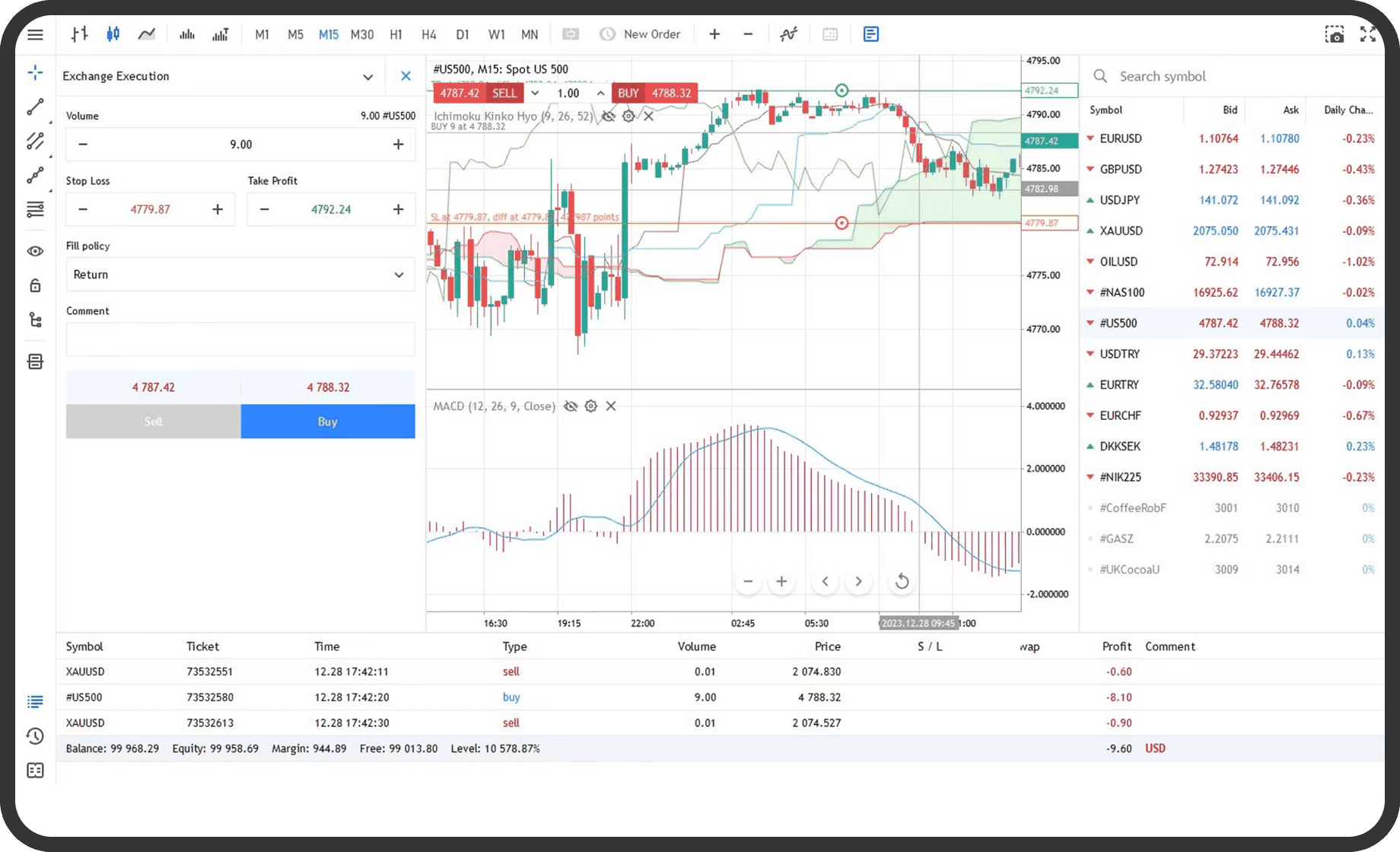
The industry standard is MetaTrader 5: multi-asset support, advanced charting, algorithmic trading, and a massive ecosystem. A broker offering MT5 means your skills, indicators and EAs are portable. Also check what markets you can actually reach — a genuine multi-asset broker gives you forex, stocks, commodities, indices and bonds from one account.
7. Try the Withdrawal Before You Need It
The oldest test in the book: deposit a modest amount, trade a little, then withdraw. A trustworthy broker processes withdrawals promptly, by the same method you deposited, without invented fees or stalling. How a broker treats money leaving is the truest measure of how it will treat you.
The Checklist, In One Glance
- License verified on the regulator's own register
- Client funds segregated at reputable banks
- Business model aligned with your success
- Full cost of trading published and understood
- Execution infrastructure you can test
- A serious platform (MT5) and true multi-asset access
- Withdrawals tested early
Warning Signs That Should End the Conversation
Some things are not trade-offs to weigh. If you see any of these, stop.
A guaranteed return, or a "managed account" that promises one. Nobody can guarantee a return in a market. A regulated broker cannot legally offer this, so anyone offering it is either unregulated or breaking their own rules.
Pressure to deposit more, especially after a loss. A broker whose staff are incentivised to grow your deposit has an interest opposed to yours. Any call that begins with "to recover that loss, you'd need to…" is the end of the relationship.
A bonus that locks your withdrawal. "Deposit $1,000, get $500 free" almost always comes with a volume condition that must be met before any of your money can be withdrawn — your own deposit included. Several regulators have banned these outright, which tells you what they are for.
Bank details sent by email or chat. A broker's payment details should live behind your login. Details arriving in a message are the single most common vehicle for fraud in this industry, whether the sender is the broker or someone impersonating them.
Withdrawals that need a phone call. Depositing takes a form; withdrawing should too. If taking money out requires speaking to someone who will try to talk you out of it, you have learned everything you need.
A regulator you cannot look up. Some brokers cite bodies that exist only as a registration certificate. If you cannot find a public, searchable register with the licence number in it, treat the claim as absent rather than unverified.
Do the Twenty-Minute Check
Before funding any account, including this one:
- Find the licence on the regulator's own site. Not the broker's page about it — the register. Confirm the company name matches exactly and the licence is current.
- Read the complaints policy. How long do they have to answer, and where do you go if the answer is unsatisfactory? The route should not end with them.
- Search the company name with "withdrawal". Ignore the marketing and the review sites that take payment for placement. Look for a pattern, not for isolated angry posts — every broker has those.
- Open a demo and place a trade at a news release. You will learn more about execution and spreads in ten minutes than from any page of claims.
- Deposit a small amount and withdraw it. Before you have anything at stake. A broker that makes the first withdrawal difficult will not make the tenth easier.
Twenty minutes, done once, in advance, is the cheapest risk management available to you — and it is the step almost nobody takes until they need it.
Where Ultimo Stands
Ultimo Securities is built to pass this checklist openly: FSC Mauritius regulation (GB24203027), segregated client accounts with top-tier banks, transparent spread-based pricing with zero commission on forex, LD4 execution infrastructure, MetaTrader 5, and free deposits and withdrawals. Verify everything yourself — then open your account in minutes or start with a free demo.
Written by the Ultimo Research Desk and checked against our own contract specifications and client agreement before publication; reviewed again when those change. Educational only — nothing here is a recommendation to trade. Spotted an error? Tell us.
Ready to see how forex trades at Ultimo?
Forex trading