6 minute read · Ultimo Research Desk · Reviewed 5 Sept 2026
Day Trading: What It Is, What It Requires and Where It Fails
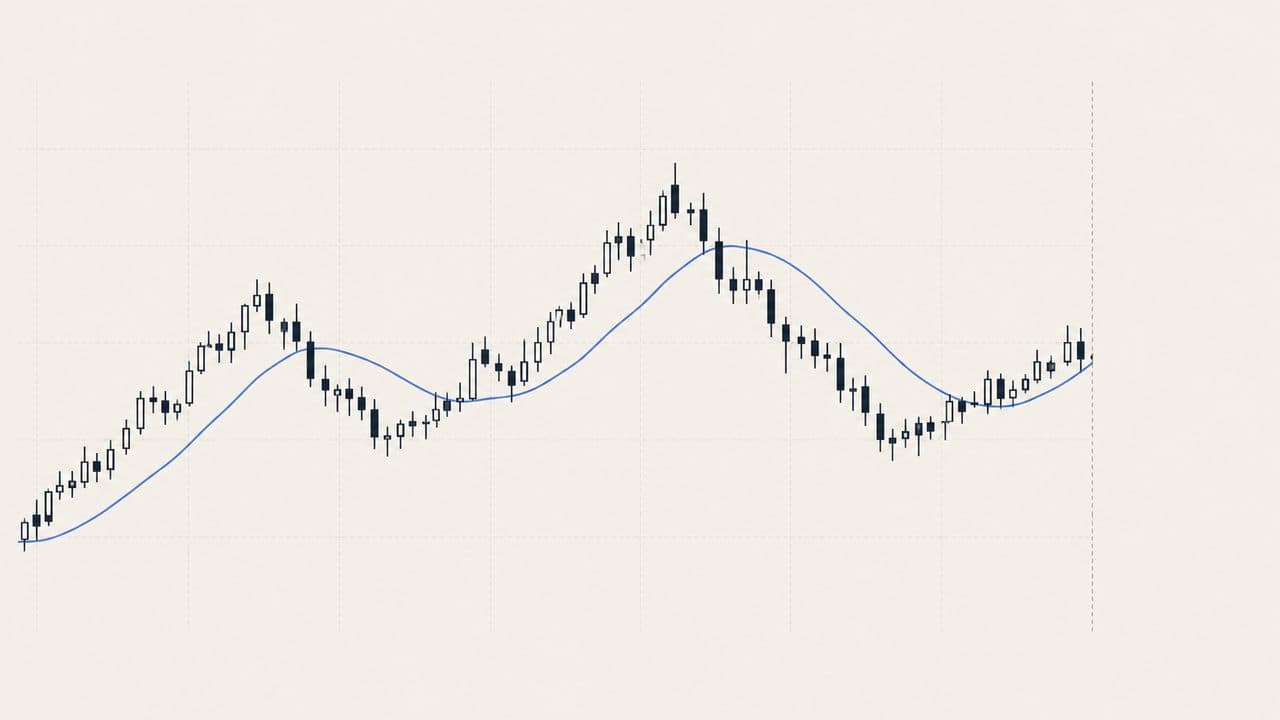
Day trading opens and closes positions within the same trading session, so the approach seeks to respond to intraday price movements rather than hold overnight. It depends most on execution and decision quality over short intervals, because small price changes must cover dealing costs before the session ends.
What it is
Day trading is a holding-period approach. A position can be based on a range, momentum, order-flow information, scheduled news, a technical reference or a discretionary reading of price. The defining feature is that the position is normally closed before the relevant session ends. It is used in shares, equity indices, foreign exchange, futures and other instruments that provide intraday prices and sufficient trading activity.
Timeframes range from seconds or minutes to several hours. A strategy that uses one-minute data faces different noise, data and execution conditions from one that uses a four-hour session range. The approach has no single documented origin. It developed alongside electronic markets, intraday charting and short-horizon market-making and speculative practices. A day-trading label does not identify a particular signal or outcome.
Closing before the session boundary removes one form of overnight exposure but does not remove gap or liquidity risk within the session. A market can halt, move rapidly after news or reopen at a different price after a temporary interruption. The fact that a position is short-lived does not make the underlying risk short-lived.
What it requires
Day trading requires a reliable schedule and enough time at the screen to observe signals, orders and open exposure. It also requires accurate, timely prices and a process for defining the session, the order timing and the point at which a trade is no longer valid. A reader with a full-time occupation may not be able to monitor the relevant interval consistently.
Capital must cover the position size, dealing costs and the possibility of a sequence of losses. Small positions may make each monetary result small, but the costs can become a large part of the result when turnover is high. The instrument must be understood in terms of its trading hours, tick size, contract specification, price gaps and liquidity. A fast connection and functioning order route are operational requirements, not sources of predictive information.
Data quality matters. Intraday highs, lows, volume and timestamps must be consistent. News calendars and market closures can change liquidity within minutes. A day-trading process also requires a record of all attempted and completed orders, including cancellations and slippage, because a chart review cannot reconstruct every decision after the fact.
How it is implemented
An implementation defines the session, the setup, the order type and the time at which a position is closed. Setups may use an opening range, a price level, a moving-average relationship, a short-term momentum measure or an event. The position is sized before the order and is reduced or closed when the stated price, time or information condition occurs.
A day-trading process normally limits overnight positions, but it still needs a rule for a halt, a platform interruption, a rejected order or a news release. Position sizing may be fixed, linked to recent intraday volatility (ATR) or related to the distance to a planned exit (position size calculator). The rules must distinguish an intended exit from an exit caused by a technical failure. A high number of observations does not by itself improve the quality of the information.
Worked example
Assume one unit is bought at a mid-price of 100 and closed during the same session. The round-trip spread cost is assumed to be 0.10. Commission is 0.20 on entry and 0.20 on exit. Intraday slippage is assumed to total 0.10. Total cost is 0.10 + 0.20 + 0.20 + 0.10 = 0.60. No overnight financing is included because the position is closed in the session.
In a favourable case, the exit mid-price is 100.80. Gross result is 100.80 − 100 = 0.80. Net result is 0.80 − 0.60 = 0.20 price units.
In an adverse case, the exit mid-price is 99.50. Gross result is 99.50 − 100 = −0.50. Net result is −0.50 − 0.60 = −1.10 price units. The example is illustrative. It shows that a small intraday movement can be largely consumed by assumed costs and that the losing case can be larger than the favourable net case.
Costs
Spread and commission are paid frequently when turnover is high. Slippage can vary sharply during the opening minutes, news releases and low-liquidity periods. A fill at a displayed chart price may not be available when the order reaches the market. Repeatedly cancelling and replacing orders can also increase the difference between the intended and actual price.
Day trading normally avoids overnight financing, but it can incur other costs from data, market access, order routing, currency conversion and frequent position changes. A cost assumption based on a normal market can be unsuitable during a fast event. The relevant comparison is the expected price movement after costs, not the gross movement shown by a chart.
Where it fails
Day trading is hurt by market noise, rapid reversals, thin periods and unexpected events. A setup can be correct in direction but still fail because the price reaches the exit before the intended fill. Repeated trades in a narrow range can accumulate costs without a meaningful net movement.
Fatigue and attention changes matter because decisions are made in close sequence. Behavioural errors include increasing size after a loss, trading outside the defined session, holding a position after its reason has disappeared, and treating a series of short-term outcomes as evidence of skill. Technical failures, data interruptions and rejected orders can also create exposure that was not present in the original plan.
Who it suits and who it does not
Day trading is more compatible with someone who can monitor the relevant session, maintain a reliable operational setup and accept frequent small outcomes. It requires enough capital for costs and for a sequence of losing trades, as well as the ability to close positions without relying on a later recovery.
It is less compatible with someone who cannot be at the screen during the chosen interval, cannot absorb frequent dealing costs, or needs a slower decision process. It is also less suitable when the instrument has unreliable intraday liquidity or when the reader cannot maintain a complete record of fills and costs.
What the evidence says
Barber and Odean (2000) studied 66,465 individual households and found a relationship between frequent trading and lower net performance in their sample. The study is about active individual stock investors rather than every form of day trading, but it is directly relevant to the effect of turnover and decision frequency on retail outcomes. It does not establish that a particular intraday rule will produce the same result.
Park and Irwin (2007) reviewed technical-analysis studies and reported that conclusions depend on markets, methods and costs. Research on a specific day-trading setup would need to account for timestamp rules, intraday selection, spread, commission, slippage and survivorship. The cited literature does not provide a universal predictive finding for the day-trading label itself.
Sources
- Barber and Odean (2000), “Trading Is Hazardous to Your Wealth: The Common Stock Investment Performance of Individual Investors”, DOI.
- Park and Irwin (2007), “What Do We Know About the Profitability of Technical Analysis?”, DOI.
- Sullivan, Timmermann and White (1999), “Data-Snooping, Technical Trading Rule Performance, and the Bootstrap”, DOI.
- John J. Murphy, Technical Analysis of the Financial Markets (1999), Google Books.
Educational only: Day trading concentrates market, operational and dealing-cost risk into short intervals and does not remove the possibility of loss.
Written by the Ultimo Research Desk and checked against our own contract specifications and client agreement before publication; reviewed again when those change. Educational only — nothing here is a recommendation to trade. Spotted an error? Tell us.