6 minute read · Ultimo Research Desk · Reviewed 5 Sept 2026
News and Event Trading: What It Is, What It Requires and Where It Fails
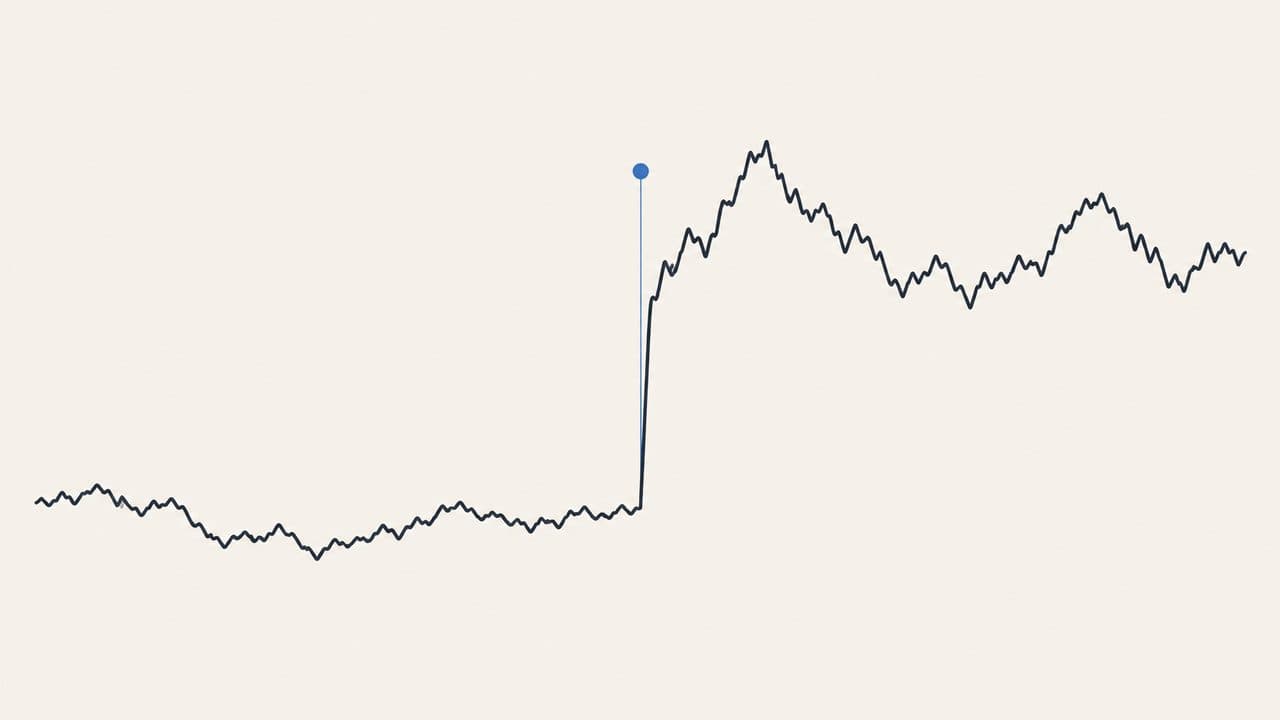
News and event trading takes exposure around information that may change an asset’s price, such as an economic release, earnings announcement or policy decision. It depends most on receiving, interpreting and acting on information before the relevant price adjustment is complete, while recognising that the direction and size of the adjustment are uncertain.
What it is
The approach can involve scheduled events, including interest-rate decisions, inflation data, employment releases and company results, or unscheduled events, including political decisions, natural disasters and unexpected corporate announcements. The instrument can be an equity, index, currency, bond, commodity or derivative whose price is sensitive to the event. The holding period can be seconds, a session or several weeks.
Event studies are a documented origin of the academic analysis. They examine how prices, volume or volatility change around a defined announcement. News trading adds a decision and execution process around that information. It is not the same as reading a headline after the market has already adjusted. The relevant information may be the difference between the reported number and the market’s prior expectation, not the absolute number.
A scheduled event can be partly reflected in prices before its release. An unscheduled event can arrive when the market is thin or closed. News can also affect several instruments at once, creating correlations that are not obvious in ordinary conditions. The event label therefore covers different timing, data and liquidity problems.
What it requires
News and event trading requires a reliable event calendar, a defined source of data and a process for comparing the release with the prior expectation. For company announcements, the relevant information may include earnings, guidance, cash flow, dividends or corporate actions. For macroeconomic releases, the prior estimate, revision and jurisdiction can matter as much as the headline figure.
Time at the screen depends on the event horizon. A position around a release requires attention before, during and immediately after the announcement. A longer event position requires monitoring of follow-up information and policy interpretation. Capital must cover price gaps, temporary liquidity changes and positions that do not fill at the intended level.
The instrument must be understood in terms of its trading hours, settlement and sensitivity to the event. Data timestamps must be synchronised. The reader also needs a way to record the information available at the decision time, because later headlines and revised data can make the original situation look clearer than it was.
How it is implemented
An implementation defines the event, the information window and the condition that counts as a surprise. It may take exposure before the event, after the release or only once the initial price response has been observed. It may close at a time limit, a price condition or when the information has been incorporated into the model. The position size reflects the possible gap and the uncertainty of the response.
An event process should distinguish the first release from later revisions and should state how an interrupted or delayed release is treated. A market can move in the expected direction and still produce a poor fill because the price adjustment occurs before the order is processed. A model may also hedge one instrument with another, but the hedge can respond differently to the same announcement.
Worked example
Assume one unit is held around an event at a mid-price of 100. The round-trip spread cost is assumed to be 0.20. Commission is 0.20 on entry and 0.20 on exit. Slippage around the release is assumed to total 0.40. Total cost is 0.20 + 0.20 + 0.20 + 0.40 = 1.00.
In a favourable response case, the exit mid-price is 102. Gross result is 102 − 100 = 2.00. Net result is 2.00 − 1.00 = 1.00 price unit.
In an adverse response case, the exit mid-price is 98. Gross result is 98 − 100 = −2.00. Net result is −2.00 − 1.00 = −3.00 price units. The figures are illustrative. They show that event-related slippage can be a material part of the outcome and that a correctly identified event does not determine the price response.
Costs
Spread and slippage often widen around a release. Commission is paid on the position changes, while financing applies if the position is held beyond the relevant daily cut-off. A gap can cause the actual exit to differ materially from the level used in a plan. Hedging can add a second set of costs and can leave basis risk if the two instruments do not respond equally.
Data and calendar quality are also cost considerations. A delayed or revised release can invalidate a decision based on an earlier timestamp. A historical test must model the information actually available at the time, rather than using a final revised series. Event-driven turnover can be high even when the number of calendar events is small.
Where it fails
News and event trading is hurt by an event that is already reflected in price, a release that differs from the model’s expectation in an unexpected way, or an initial move that reverses. A headline can be interpreted differently by different markets. A policy decision can have a direct effect on one instrument and a secondary effect on another.
Operational failures include receiving the data late, using the wrong time zone, misunderstanding a revision or assuming that a displayed price can be filled during a gap. Behavioural errors include increasing size before an event because of confidence in one interpretation, holding after the information has changed, and treating a single event outcome as evidence about the next announcement.
Who it suits and who it does not
News and event trading is more compatible with someone who can monitor information sources and market reactions at the relevant time, understand the instrument’s event sensitivity and accept large short-term uncertainty. It requires capital for gaps and a process for recording the exact information available.
It is less compatible with someone who cannot be present during releases, cannot tolerate a move through the intended price, or relies on a headline without understanding the prior expectation. It is also less suitable when the data source, timestamp or instrument response cannot be verified.
What the evidence says
Tetlock (2007) studied media content and stock-market activity. The paper found that media pessimism was associated with subsequent market behaviour in its sample, but the result concerns a defined media measure and stock data rather than a general news-trading method. It does not establish that a reader can receive or trade the same information at the same time.
Da, Engelberg and Gao (2011) used search frequency as a measure of investor attention and examined its relation to stock prices and later reversals. This supports the idea that attention and information timing can matter, but it is not a test of a particular event calendar, order process or retail holding rule. The evidence describes information transmission and attention; it does not provide a universal event-trading conclusion.
Sources
- Tetlock (2007), “Giving Content to Investor Sentiment: The Role of Media in the Stock Market”, DOI.
- Da, Engelberg and Gao (2011), “In Search of Attention”, DOI.
- Park and Irwin (2007), “What Do We Know About the Profitability of Technical Analysis?”, DOI.
- John J. Murphy, Technical Analysis of the Financial Markets (1999), Google Books.
Educational only: News and event trading is exposed to information gaps, rapid repricing, uncertain interpretation and wider execution costs.
Written by the Ultimo Research Desk and checked against our own contract specifications and client agreement before publication; reviewed again when those change. Educational only — nothing here is a recommendation to trade. Spotted an error? Tell us.