6 minute read · Ultimo Research Desk · Reviewed 5 Sept 2026
After a Failed Challenge
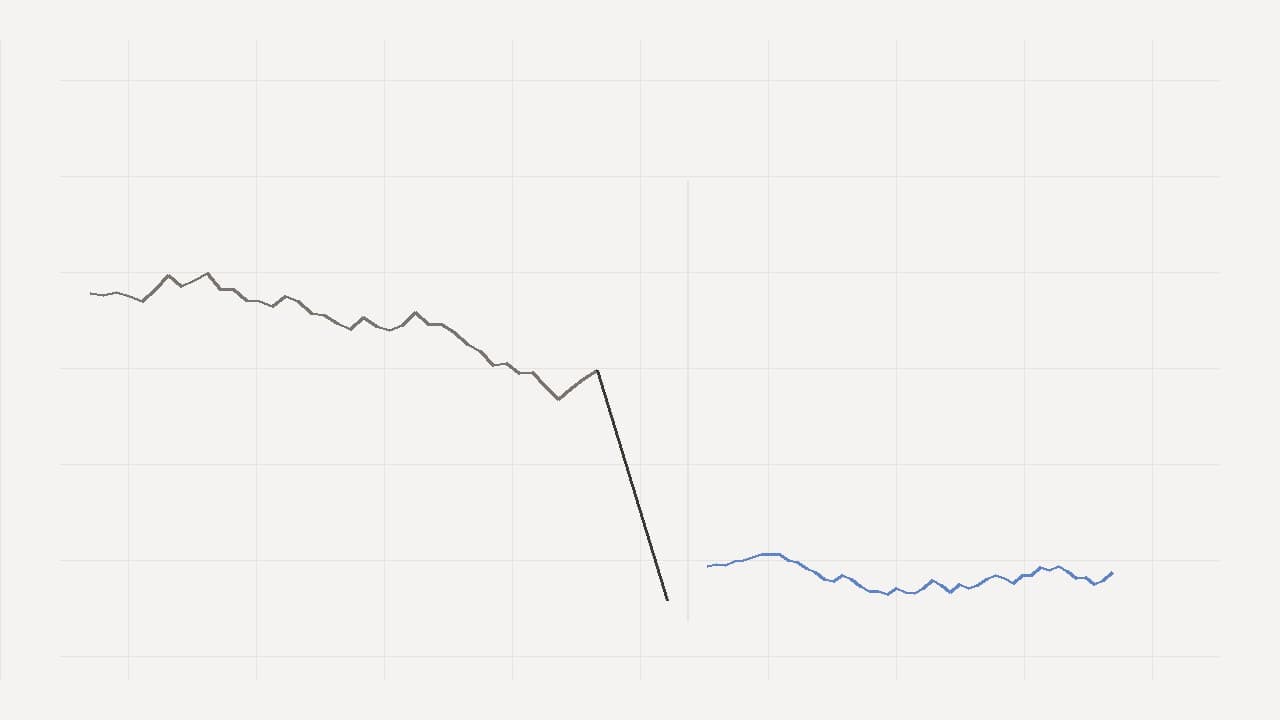
A failed evaluation is a piece of information, and usually a narrower one than it feels like. It says an account hit a limit inside a window. Whether that reflects an approach that does not work, an approach that works but was sized wrongly, or an approach that works and met an unlucky sequence is not something the failure itself distinguishes — and the offer arriving in your inbox is for another attempt, not for the answer.
Separate the three failures
Before deciding anything, establish which of three things happened. The record of the account will usually say, and it is the only part of this worth doing immediately.
The rule ended it while the account was ahead. A daily limit touched after a good morning, a trailing drawdown that had followed the account up, a consistency clause applied at payout. Here the approach was not what failed, and repeating it with better rule awareness is a defensible decision.
The account lost money steadily. No single event, a balance declining across many trades. This is the most useful outcome of the three, because it is the one that says something real: after costs, the approach did not have an edge over that period. Another attempt changes nothing about that.
One position did most of the damage. A size that was out of proportion, or a position held through something it should not have been held through. That is a risk-control failure, and it is the one that recurs on a live account too — with worse consequences, because nothing ends the account before the balance does.
These three call for different decisions. Treated as one event called "I failed", they call for whatever the marketing suggests.
What the fee bought
A challenge fee is spent whatever happened, and the sunk-cost pull afterwards is strong: the next attempt is discounted, the platform is familiar, the target felt close. It is worth being explicit that the previous fee is not a reason to pay the next one. The only question that matters is whether a fresh attempt, priced today, is worth its price given what you now know — which is why identifying which of the three failures happened has to come first.
If the honest answer is the second one, the fee bought a genuinely valuable finding: an approach was tested against real costs and a real clock and did not produce an edge. That is expensive tuition, and it is still tuition. What it does not support is paying again for the same test.
Reading the account properly
Export the history and look at four things, not the profit and loss.
The distribution of results: whether the outcome came from many small trades or a few large ones. A result driven by one or two positions is not evidence about the approach in either direction.
The losing run: the longest sequence of consecutive losses, and whether the position size could have survived twice that. Most sizing is set for the losing run the trader imagines, which is consistently shorter than the one that arrives.
The costs: spread, commission and overnight financing as a share of the gross result. An approach that is gross-profitable and net-negative is a costs problem with a specific fix, not a strategy problem, and it is common in high-frequency approaches like scalping.
The rule breaches: which limit was hit, on which day, and what the trade before it was. If the answer is "the one after a loss", that is a behavioural pattern and it will follow you to any account.
On MT5, exporting the statement takes a minute, and the account line explains which number the rule was measured against.
The three honest options
Another attempt, with something changed. Defensible when the first failure was a rule breach rather than a loss, and only when the specific change is nameable in advance — a smaller size, a different daily stop, avoiding a category of trade. "Trading better" is not a change.
A live account, smaller. The capital is yours and the rules are the market's, so the artificial failure modes disappear. What replaces them is that losses are permanent and nobody stops you. A small live account trades a $100,000 simulated balance for, perhaps, $2,000 of real exposure — which is a large reduction in position size and a large increase in how much each decision matters. The two arrangements compared directly is the piece to read before choosing, and account types matter more at small size than at large, because costs are a bigger share of a small result.
Neither, for now. Testing without money at stake produces most of the same information about an approach, minus the part about how you behave under pressure — which is the part worth learning last rather than first. A period spent establishing whether the approach has an edge at all costs nothing and answers the question the fee was being spent on.
What not to do next
Do not increase size to recover the fee. The fee is gone and a larger position does not retrieve it; it converts a fixed loss into an open-ended one.
Do not buy an attempt at a larger account because the profit split looks better. The rules scale with the account and so does the difficulty of the target.
Do not decide within a day of the failure. A losing run distorts judgement in a specific and well-documented direction, and a decision made while it is still working is a decision made by it.
If the answer is a live account
Then it is worth doing deliberately. How to choose a regulated broker covers what to check and how to verify it rather than take it on trust; risk management and a written plan are what make a small account survive long enough to be informative. Neither is exciting, and both matter more than the choice of firm.
A live account is not a consolation prize for a failed challenge, and it is not an easier version of one. It is a different arrangement with a different set of ways to lose, and the traders who do well on it are the ones who understood that before they funded it.
Written by the Ultimo Research Desk and checked against our own contract specifications and client agreement before publication; reviewed again when those change. Educational only — nothing here is a recommendation to trade. Spotted an error? Tell us.